Battle of Fort Harrison
4-5 September 1812
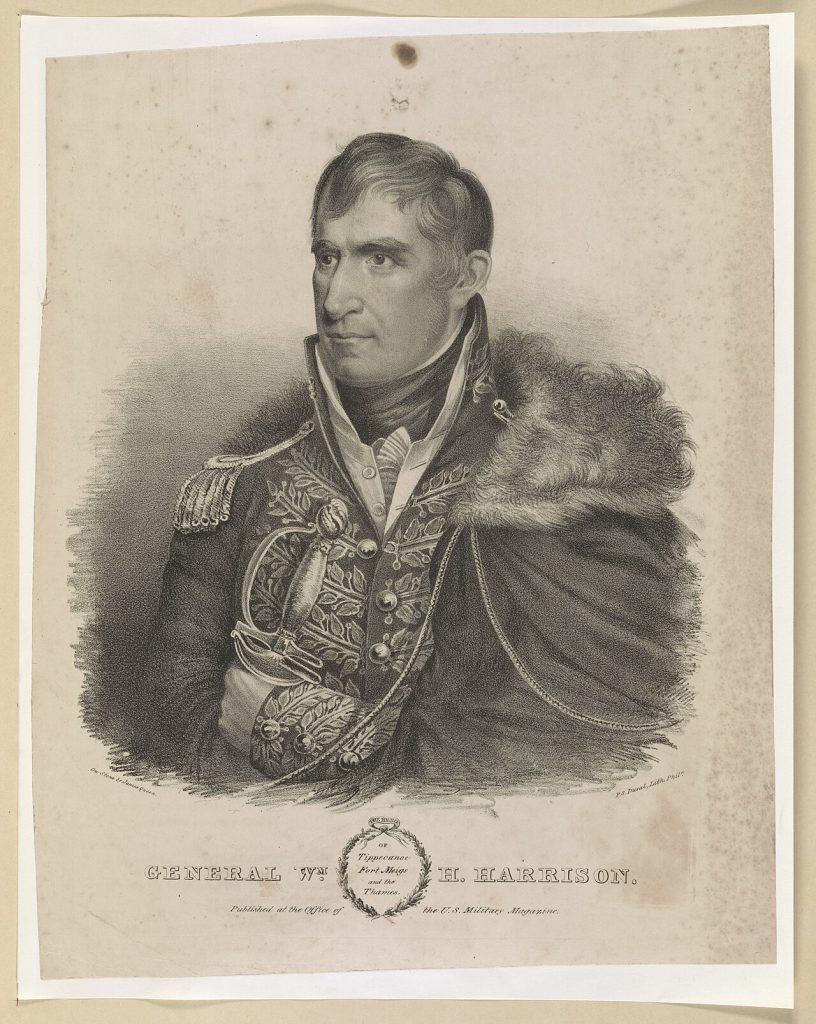
"William Henry Harrison" — Rembrandt Peale, c. 1813. Oil on canvas. Public domain.
Opposing Forces
N/A (Shawnee and Miami warriors, British-allied)
Shawnee and Miami warriors
Casualties: Unknown; estimated moderate
Capt. Zachary Taylor
7th US Infantry; many of the garrison were ill
Casualties: 3 killed, 3 wounded
The defence of Fort Harrison on the night of 4-5 September 1812 was the first significant military action of the man who would become the twelfth President of the United States. Captain Zachary Taylor, commanding a sickly garrison of approximately 80 men — of whom only 50 were fit for duty — repulsed an attack by several hundred Shawnee and Miami warriors on a small stockade near present-day Terre Haute, Indiana.
Fort Harrison was a modest frontier post, part of the chain of fortifications that guarded the approaches to the Indiana settlements. In September 1812, with Detroit fallen and Mackinac lost, the entire frontier was in crisis. Warriors allied to Tecumseh’s confederacy were attacking American positions from the Great Lakes to the Ohio Valley.
The attack came at night. Warriors set fire to one of the blockhouses that formed part of the fort’s perimeter. As the flames spread, the garrison faced the prospect of the entire fort burning around them. Taylor, displaying the calm under pressure that would later characterise his Mexican War campaigns, organised a bucket brigade to fight the fire while simultaneously manning the walls against warriors firing from the darkness.
Two soldiers deserted during the confusion, climbing over the walls and disappearing into the night. The remainder held their posts. Taylor personally directed the defence, moving from point to point along the walls, rallying men who were sick, frightened, and fighting fire and warriors simultaneously.
By dawn, the fire was contained, the attacks had ceased, and the warriors withdrew. American casualties were three killed and three wounded. Taylor was promoted to brevet major — a promotion he had been seeking for years — and his defence of Fort Harrison was recognised by his superiors and by Congress as a notable achievement.
The engagement was small by any standard — fifty men defending a stockade against a night attack. But it demonstrated a principle that would be confirmed repeatedly throughout the war: determined defenders in fortified positions could hold against forces many times their size, provided they kept their nerve and their organisation. Taylor kept both.
Significance
A future president's first battle. Taylor's defence of Fort Harrison with 50 effective soldiers against several hundred warriors was one of the war's earliest American defensive successes on the frontier.