Capture of Fort Niagara
19 December 1813
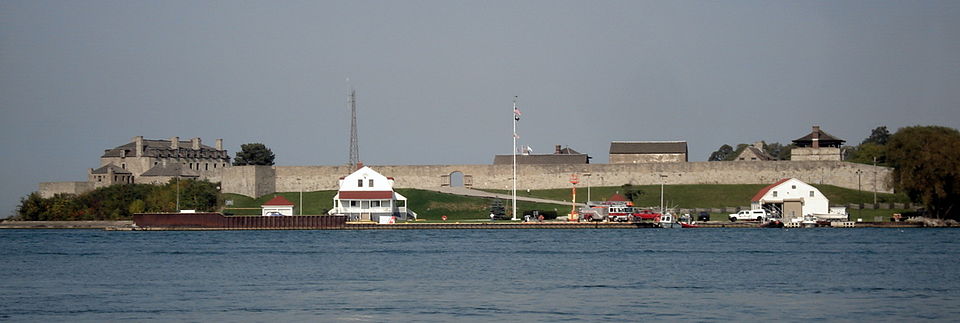
"Fort Niagara" — Edward Walsh, early 19th century. Watercolour. Public domain.
Opposing Forces
Col. John Murray
100th Foot, Royal Scots, grenadier companies, Indigenous warriors
Casualties: 6 killed, 5 wounded
Capt. Nathaniel Leonard
Garrison of Fort Niagara - regulars and militia
Casualties: 65 killed, 14 wounded, ~340 captured
The British capture of Fort Niagara on the night of 19 December 1813 was a swift, precisely executed night assault that reversed the last significant American position on the Niagara frontier. It was also an act of calculated retribution – a direct response to one of the war’s most controversial American decisions.
Nine days earlier, on 10 December, the retreating American commander on the Niagara, Brigadier General George McClure, had ordered the destruction of the town of Newark (present-day Niagara-on-the-Lake). The burning was conducted in midwinter, and approximately 400 civilian families – men, women, children, and the elderly – were turned out of their homes into freezing temperatures with minimal notice. The act was widely condemned, even within the American military establishment, and McClure was subsequently censured by his own government. Secretary of War John Armstrong disavowed the order, though the question of whether McClure had acted with or without authorisation remains debated.
Lieutenant General Gordon Drummond, who had recently assumed command on the Niagara frontier, resolved to respond immediately. Colonel John Murray was given approximately 550 men drawn from the 100th Regiment of Foot, the Royal Scots, grenadier companies from several regiments, and a detachment of Indigenous warriors. Their objective was Fort Niagara, the stone fortification on the American side of the Niagara River that commanded the river mouth.
The assault was launched in the early hours of 19 December. Murray’s force crossed the river in boats under cover of darkness. Intelligence – possibly obtained from a captured American sentry, though accounts vary – provided the garrison’s password for the night. Using this password, British troops approached the main gate and gained entry before the alarm could be raised.
What followed was brutal. The garrison was taken almost entirely by surprise. Many American soldiers were bayoneted in their quarters before they could arm themselves. The fighting was hand-to-hand and lasted less than twenty minutes. Captain Nathaniel Leonard, the fort’s commander, was criticised afterward for the lax state of his defences – the gates were reportedly unlocked, sentries were few and poorly posted, and the garrison appears to have been wholly unprepared for an attack despite the burning of Newark having made British retaliation virtually certain.
British casualties were remarkably light: six killed and five wounded. American losses were severe: 65 killed, 14 wounded, and approximately 340 captured. The disparity reflected the completeness of the surprise.
Fort Niagara remained in British hands for the remainder of the war and was returned to the United States only under the terms of the Treaty of Ghent. Its capture, combined with subsequent British raids on the American side of the Niagara – including the destruction of Lewiston, Black Rock, and Buffalo in the days following the fort’s fall – effectively reversed the balance of power on the Niagara frontier. By the end of December 1813, the Americans held nothing on the Canadian side of the river, and the British controlled the most important fortification on the American side.
The Newark-Fort Niagara sequence also contributed to the broader cycle of destruction and retaliation that would culminate in the burning of Washington eight months later. The British cited both the burning of York and the burning of Newark when they entered the American capital. Cause and consequence, action and reaction: the war’s pattern of escalating destruction ran in one direction, from American initiative to British response.
Significance
The capture avenged the American destruction of Newark and secured the entire Niagara frontier for Britain. Fort Niagara remained in British hands until the peace treaty.