Capture of USS Tigress of Lake Erie
12 August 1814
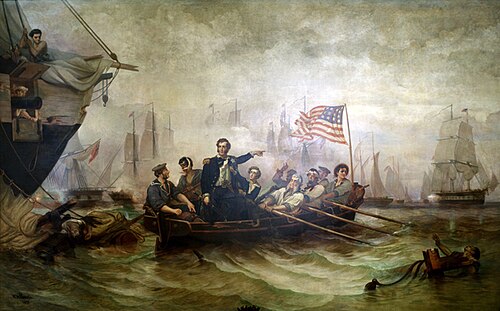
"Commodore Perry at the Battle of Lake Erie" — William Henry Powell, 1873. Oil on canvas, United States Senate. Public domain.
Opposing Forces
Lt. Radcliffe, RN
Sailors and marines from the Lake Erie squadron in ship's boats
Casualties: 2 killed, 2 wounded
Sailing Master Stephen Champlin
1-gun schooner on patrol duty, Lake Erie
Casualties: 2 killed, 4 wounded; vessel captured
The capture of USS Tigress on Lake Erie on 12 August 1814 was a classic cutting-out operation — a night boarding action conducted from ships’ boats against an anchored vessel. It was one of several such operations during the war that demonstrated the Royal Navy’s expertise in small-boat warfare, a skill honed through decades of similar operations in the Mediterranean, the Caribbean, and the Baltic during the Napoleonic Wars.
Following Perry’s victory at Lake Erie in September 1813, the Americans had controlled the lake. But by 1814, the British had rebuilt sufficient small-boat capability to contest isolated American vessels. Tigress, a small one-gun schooner, was on patrol duty in the western reaches of the lake.
Lieutenant Radcliffe assembled a boarding party of approximately 200 sailors and marines in the ships’ boats of the British Lake Erie squadron. The approach was made at night, achieving surprise. The boarding was swift and violent — the small American crew of 28 men was overwhelmed before effective resistance could be organised. British casualties were 2 killed and 2 wounded; American losses were 2 killed and 4 wounded, with the vessel captured.
Tigress was commissioned into British service and operated on the lake for the remainder of the war. The capture, while minor in scale, demonstrated that British naval enterprise on the Great Lakes continued even after the catastrophic loss of the Lake Erie squadron. The willingness to conduct aggressive small-boat operations against a nominally superior enemy was characteristic of a naval service that had spent two decades fighting the world’s most experienced naval war.
Significance
One of several British cutting-out operations on the lakes that demonstrated the Royal Navy's ability to project power through small-boat operations even where they lacked conventional naval superiority.