USS Constitution vs HMS Cyane and HMS Levant
20 February 1815
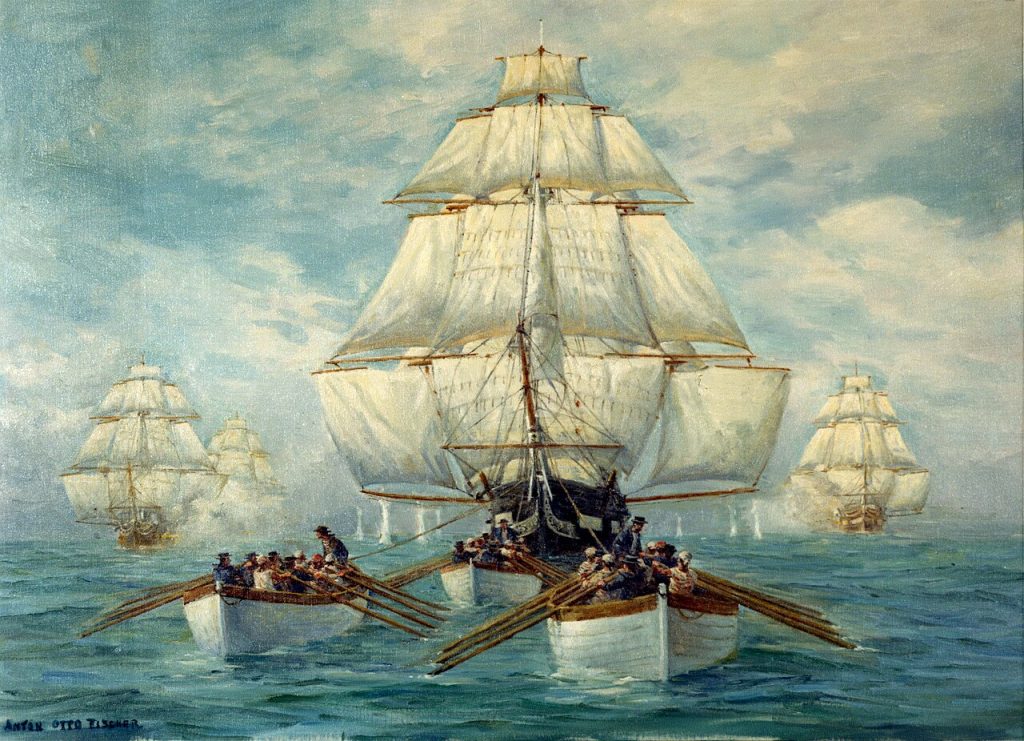
"USS Constitution vs HMS Guerriere" — Michel Felice Corné, c. 1812. Oil on canvas. Public domain.
Opposing Forces
Capt. Gordon Falcon (Cyane), Capt. George Douglass (Levant)
Combined force of two smaller warships; total broadside lighter than Constitution's alone
Casualties: 35 killed, 42 wounded; both ships captured
Capt. Charles Stewart
44-gun heavy frigate; Stewart's seamanship was exceptional
Casualties: 3 killed, 12 wounded
The action between USS Constitution and HMS Cyane and HMS Levant, fought off the coast of Madeira on 20 February 1815, was Old Ironsides’ final combat of the War of 1812 — and one of the finest displays of seamanship produced by either side during the conflict. Captain Charles Stewart manoeuvred his heavy frigate against two opponents simultaneously, defeating both in an engagement that demonstrated exceptional tactical skill. It was also, like New Orleans, fought after the Treaty of Ghent had been signed — a postscript to a war that was already over.
Constitution had slipped out of Boston in December 1814 during a storm that scattered the blockading squadron. Stewart cruised southward toward the Azores, capturing several merchant prizes. On the evening of 20 February, he encountered the two British warships sailing in company.
HMS Cyane was a 34-gun frigate; HMS Levant was a 21-gun corvette. Their combined armament was substantial — 55 guns — but their combined broadside was still lighter than Constitution’s alone. The American frigate’s 24-pounder long guns outranged and outweighed anything the British ships carried. Nevertheless, two ships operating together could threaten from multiple directions simultaneously, and Stewart’s challenge was to prevent them from coordinating their attack.
Stewart’s solution was brilliantly executed. He manoeuvred between the two British ships, alternately engaging each one while preventing them from concentrating their fire. His handling of Constitution — a large, heavy frigate — was described by witnesses as approaching perfection. He backed sails, filled them, wore ship, and shifted fire from one opponent to the other with a speed and precision that left both British captains unable to coordinate their response.
Cyane struck first, her captain wounded and her rigging destroyed. Levant attempted to escape but was pursued and captured. Total British casualties were 35 killed and 42 wounded across both ships. American losses were 3 killed and 12 wounded — a disparity that reflected both Stewart’s seamanship and Constitution’s material advantage.
The victory was genuine and Stewart’s performance was exceptional. But it changed nothing. The Treaty of Ghent had been signed eight weeks earlier. Constitution’s triumph, like Jackson’s at New Orleans, belonged to the mythology of the war rather than to its strategic reality. The ship that had begun the naval war with the destruction of Guerriere in August 1812 ended it with a victory that the peace treaty had already rendered meaningless.
Constitution survived the war and is preserved today in Boston Harbor — the world’s oldest commissioned naval vessel still afloat. Her three frigate victories remain symbols of American naval heritage. They were genuine tactical achievements. They had no effect on the war’s outcome.
Significance
Constitution's final victory of the war — fought after the Treaty of Ghent was signed. Stewart's manoeuvring against two opponents simultaneously was a masterclass in seamanship, but it changed nothing about the war's outcome.