USS Enterprise vs HMS Boxer
5 September 1813
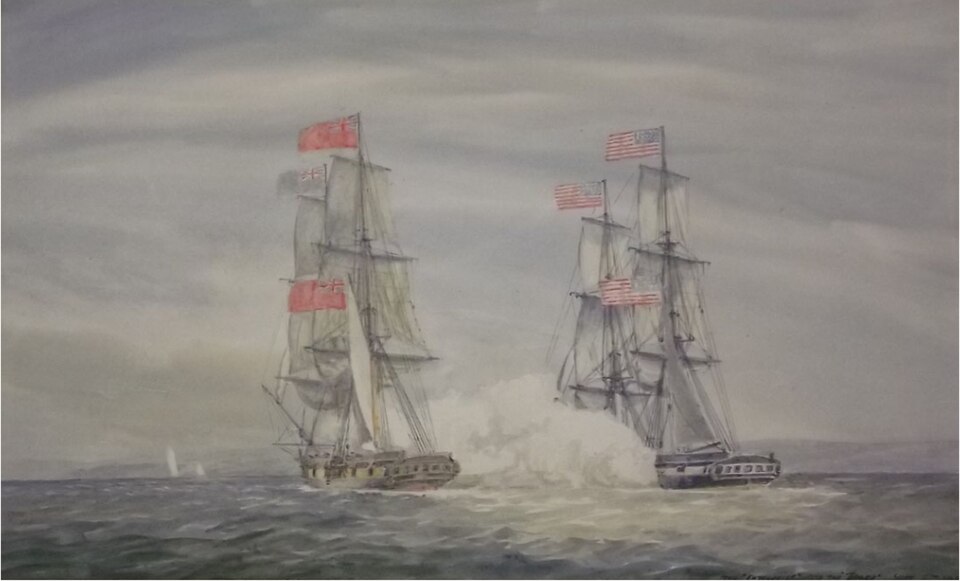
"Enterprise vs Boxer" — unknown artist, c. 1813. Public domain.
Opposing Forces
Cmdr. Samuel Blyth (killed)
14-gun brig, patrolling the New England coast
Casualties: 7 killed (incl. Blyth), 13 wounded; ship captured
Lt. William Burrows (killed)
14-gun brig
Casualties: 3 killed (incl. Burrows), 14 wounded
The action between USS Enterprise and HMS Boxer, fought off the coast of Maine on 5 September 1813, was notable less for its strategic significance — which was negligible — than for the singular distinction that both commanding officers were killed during the engagement. Lieutenant William Burrows of Enterprise and Commander Samuel Blyth of Boxer were buried side by side in Portland, Maine, with full honours from both American and British forces — a gesture of professional respect that transcended the hostilities.
Enterprise was a 14-gun brig with a crew of 102, a veteran of the Barbary Wars and one of the American navy’s most experienced small warships. Boxer, also rated at 14 guns with a crew of 66, was a smaller vessel patrolling the New England coast. The ships were approximately evenly matched, though Enterprise carried a slight advantage in broadside weight.
The engagement lasted approximately forty-five minutes. Blyth was killed early in the action by a musket ball. Burrows was mortally wounded shortly afterward by canister shot but refused to be carried below, remaining on deck until the Boxer struck her colours. He died the following day.
Enterprise’s gunnery was superior throughout the action. Boxer’s hull was riddled, her rigging cut to pieces, and her main topmast shot away. When the American prize crew boarded, they found that the British colours had been nailed to the mast — a traditional signal of determination to fight to the end. Total British casualties were 7 killed and 13 wounded from a crew of 66 — a rate of over 30 percent. American losses were 3 killed and 14 wounded.
The funeral in Portland was a remarkable event. Both officers were carried through the streets in matched coffins, followed by processions of American and British officers. They were interred side by side in Eastern Cemetery, where their graves remain. The episode illustrated an aspect of the naval war that is easily lost in strategic analysis: the mutual professional regard between officers who fought each other with lethal determination and honoured each other in death.
Significance
Both commanders were killed in action — a rare distinction. They were buried side by side in Portland, Maine, with full military honours from both nations.